
Can You Sue the Police in California? The Civil Rights Framework, Start Here
The most common thing people say when they call our office is some version of: “I didn’t do anything wrong, so they had no right to do this to me.” I understand why it feels that way. But that sentence, on its own, is not what decides a police-misconduct case.
How to File a Government Claim Against the Police in California: When, Where, and How to Do It Right
You can have a strong case against the police and still lose it before a judge ever hears the facts, not because you were wrong about what happened, but because you missed a deadline that has nothing to do with your criminal case. For many claims against a California city,

Search and Seizure and Police Brutality: Understanding Your Rights
Police encounters can escalate in seconds. A routine stop turns into a search, the search turns into a struggle, and suddenly a person is injured. In those moments it is hard to know where lawful authority ends and potential misconduct begins. Many people think of search and seizure and police
Should You Sue in Federal or State Court for a California Civil Rights Case?
You often have a real choice between California state court and federal court, and the difference is bigger than most people expect. Federal court tends to move faster, with firm scheduling orders and judges who see Fourth Amendment issues regularly. State court tends to move slower, but it can offer
What Is the Fourth Amendment? Understanding Your Constitutional Rights
Most people never think about the Fourth Amendment until an officer is standing at their car window or their front door. Then the questions come fast. Can they look in my bag? Do they need a warrant? Do I have to answer? Knowing your constitutional rights before an unexpected encounter
How to Sue the Police in California: A Civil Rights Attorney’s Guide
Yes, you can sue the police in California. Every week I talk to people who were beaten, arrested for nothing, or treated like criminals for asking a question, and most of them start the call the same way: “I didn’t think you could sue a cop.” You can. The real
Can You Sue the Police for Negligence in California?
Not every police case is about an officer who meant to hurt someone. Some of the worst injuries I see come from carelessness: a deputy who ran a red light with no lights or siren, officers who rushed into a mental health call and created the very danger they then
Why the California Bane Act Is a Powerful Tool in Police Cases and How to Prove It
A California police officer can violate your constitutional rights and still face a claim worth barely more than a fender-bender. Or that same violation can trigger a claim that comes with mandatory attorney’s fees, a shot at enhanced damages, and a price tag a city can’t shrug off as the
How Long Do You Have to Sue the Police?
Six months. For many people hurt by police in California, that is how long they have to take the first legal step, and most of them have never heard of it. Miss it, and a strong state-law case can be gone before a lawyer ever reads the file. I get
Criminal Case Meaning: What Is the Difference Between a Civil and Criminal Case?
Legal terminology can be confusing, especially after an incident that could involve both a criminal case and a civil case at the same time. Understanding what each term actually means, and how the two systems interact, helps you know what to expect and whether you might have a claim of
“Am I Free to Go?” Consensual Encounters and When Police Can Actually Seize You
By the deputies’ own testimony, my client was free to go to his room and go to sleep. Then he asked one question, and seconds later he was in handcuffs. No new evidence, no threat, nothing but a question about whether they suspected him of a crime and the answer
Can You Sue for Being Falsely Arrested? Understanding Cop Immunity
Being arrested without proper justification can shake a person’s freedom, reputation, finances, and trust in law enforcement all at once. It is natural to want accountability, and to wonder whether cop immunity means the officer will simply walk away. The truth is more complicated. Immunity can make these cases harder,
When Police Ignore the Evidence That Clears You: Dispelled Suspicion and Exculpatory Facts
My client asked the deputies to give him a breathalyzer. They refused. He explained, calmly and more than once, that he was a welcome hotel guest simply waiting on a room key. They ignored that too, and arrested him for being too intoxicated to care for himself while looking at
How to Counter Sue in Small Claims and What Police Excessive Force Cases Can Teach About Legal Claims
Being sued, or being on the receiving end of an officer’s abuse of authority, can leave a person feeling like they have no way to fight back. Both situations raise the same underlying question: how do you prove your side of the story and hold the right party responsible? Small
Why Two Hours in Custody Can Be Worth Six Figures: How Damages Work in a Civil Rights Case
My client Sky Miller was in custody for about two hours. He was never charged with a crime. The matter still resolved for $100,000. If your first reaction is that something must be missing from that story, you are asking a fair question and the honest answer is that the

Search and Seizure Rights During a Traffic Stop: What You Need to Know
Getting pulled over is stressful even when you have done nothing wrong. Red and blue lights in the rearview mirror can make it hard to remember what you are required to do, and what you are allowed to refuse. In Los Angeles, drivers are protected by the same search and
How Do You Prove Police Intended to Violate Your Rights Under California’s Bane Act?
Two Los Angeles County Sheriff’s deputies told my client, on body camera, that he brought his own arrest on himself. “You ruined it.” “That’s what happens when you want to argue with everyone.” “You did it to yourself.” Those words became some of my best evidence, not that the arrest
What Is Reasonable Suspicion? Understanding Your Rights During Police Stops
Reasonable suspicion is the legal standard that allows a police officer to briefly stop and question you, based on specific, articulable facts suggesting that criminal activity may be occurring. It requires more than a hunch or a feeling, but it is a lower bar than what’s needed to arrest or

Can Police Arrest You for Asking If They Have Reasonable Suspicion?
Two Los Angeles County Sheriff’s deputies had already agreed my client was free to go to his room and sleep. Then he asked them one lawful question: “Do you have a reasonable, articulable suspicion of a crime?” Seconds later, he was in handcuffs. The matter resolved for $100,000. I have
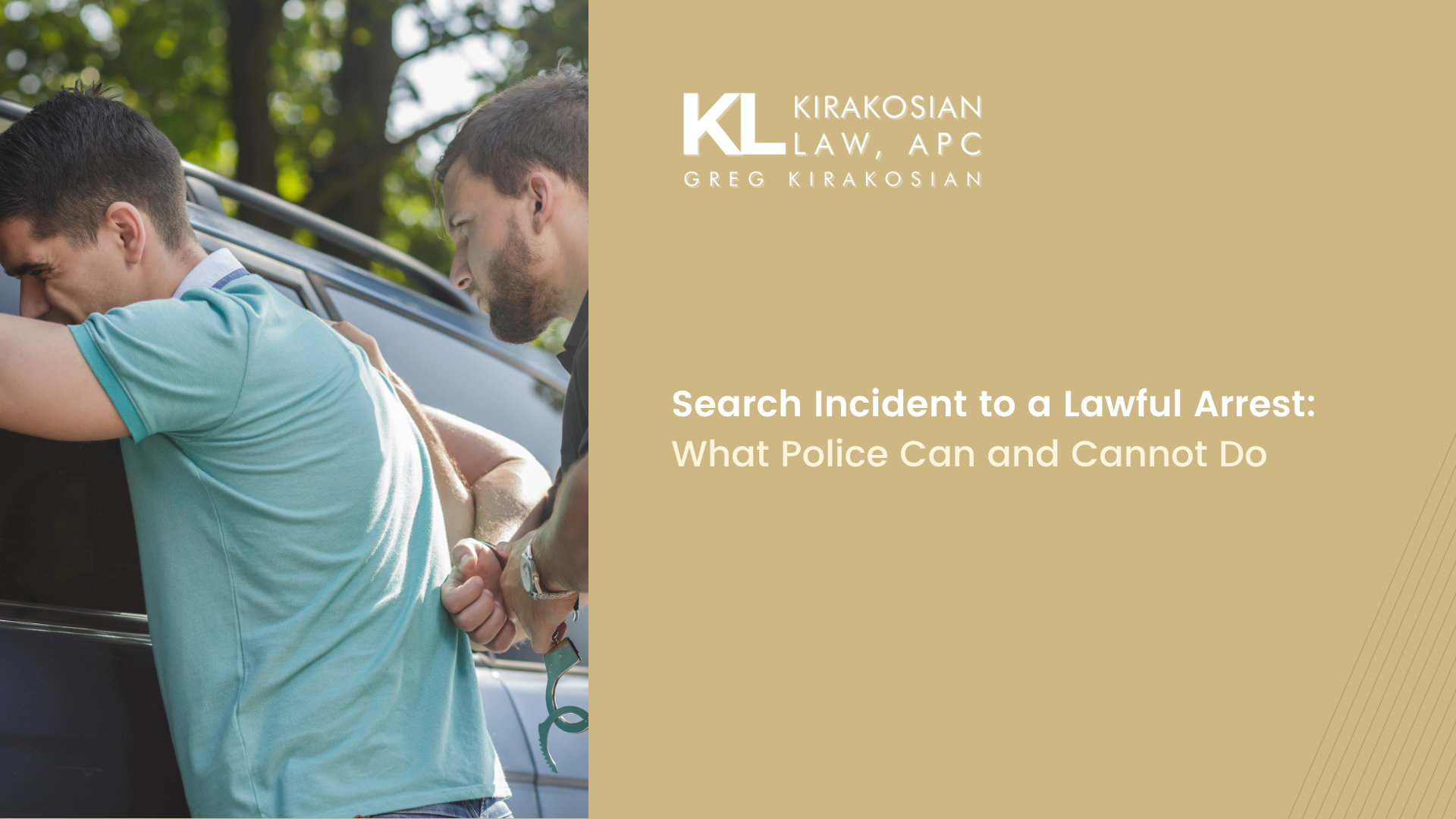
Search Incident to a Lawful Arrest: What Police Can and Cannot Do
A search incident to a lawful arrest is one of the few exceptions that allows police to search you without a warrant. When an officer makes a valid arrest, the law allows them to immediately search your person and the area within your immediate control, without first getting a warrant
Is Being Drunk in Public a Crime in California? What Penal Code § 647(f) Really Requires
A hotel guest on Catalina Island had been drinking. He got locked out of his room, was polite with the deputies who showed up, and asked for their badge numbers. Ninety minutes later he was in handcuffs, then in a holding cell having an asthma attack, arrested for nothing more

Qualified Immunity for Police Officers: What It Is and How It Affects Your Rights
Qualified immunity is a legal defense that can shield individual police officers from personal liability in civil rights lawsuits, even when their conduct violated the Constitution, unless the officer violated a right that was “clearly established” at the time. It does not mean an officer cannot be sued. It means

The Bane Act: California’s Civil Rights Law and the Fight Over Intent
Most people think suing the police is purely a federal thing. In California there is a second, often stronger path: the Bane Act. But it turns on a hard question that decides most of these cases, whether we can prove the officer meant to violate your rights. When people picture

Can Police Handcuff You or Put You in the Patrol Car During a Traffic Stop?
Almost everyone knows an officer can tell you to step out of your car. Far fewer know where that authority stops. Can they frisk you? Handcuff you? Lock you in the back of the patrol car? The line between a lawful stop and an arrest runs right through those three
Violation of Constitutional Rights: What It Means and What You Can Do
A violation of constitutional rights occurs when a government actor, such as a police officer, prosecutor, or other public official, infringes on a right guaranteed by the U.S. Constitution or the California Constitution. That includes searching you without a valid warrant or exception, arresting you without probable cause, using excessive

How to Refuse a Police Search of Your Car (and Take Back Consent)
Police do not need a warrant, probable cause, or even a good reason to search you, if you say yes. Consent is the easiest way around your rights, which is why officers are so good at getting it without you realizing you gave it. Of all the ways police get
Can You Sue a Police Officer for Defamation of Character?
False statements can damage your reputation, cost you work, strain family relationships, and follow you online or in public records long after an incident ends. When those statements come from a police officer, the harm can feel even more serious because people often assume an officer’s words are true. So,
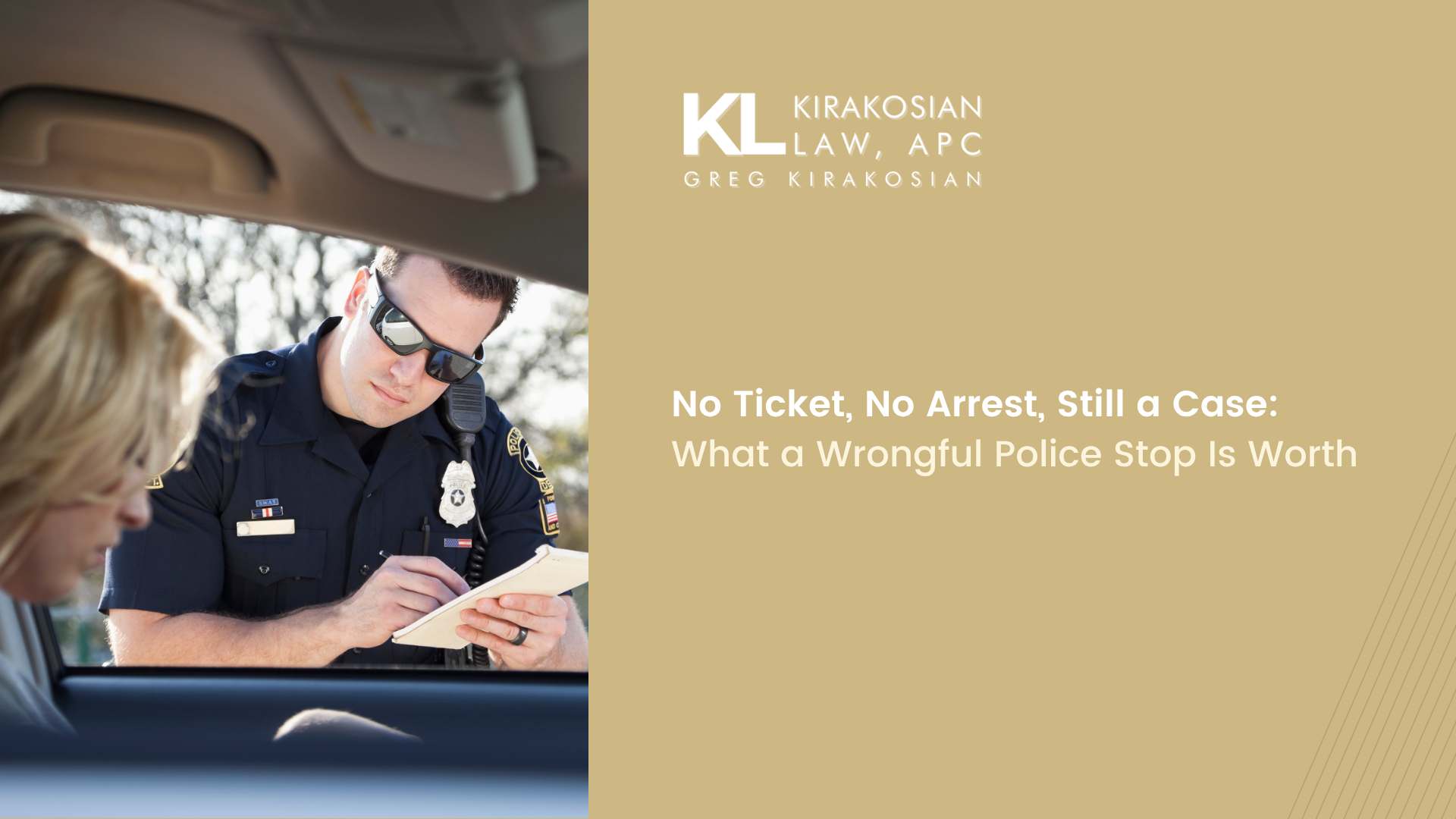
No Ticket, No Arrest, Still a Case: What a Wrongful Police Stop Is Worth
They pulled my client over, found nothing, wrote no ticket, made no arrest, and sent him on his way in about 17 minutes. That case resolved for $295,000. Here is why a stop that “ended in nothing” can still be worth serious money. The most common thing people say when

Can Police Search Your Car Without a Warrant in California?
Police pulled my client over for a dark license plate, then searched his whole car and found nothing. A traffic stop is not a search warrant. When police can actually search your vehicle without one, and when they cannot, is narrower than most people think. One of the most common
Examples of Civil Rights Violations by Police and What You Can Do
No one should have to accept abuse of power as normal. Police officers have authority, but that authority has limits. When officers use that power to unlawfully arrest someone, use excessive force, search without justification, fabricate facts, or push a case forward without probable cause, the harm can follow a
Can Your Criminal Record Be Used Against You at a Traffic Stop?
Police pulled my client over for a dark license plate. The moment they saw he had a record, the questions stopped being about the plate. The law requires something specific before police can go fishing, and your past is not part of it. There is a moment in a lot
Protection Against Unreasonable Searches and Seizures: Know Your Constitutional Rights
Protection against unreasonable searches and seizures is one of the most important rights a person has when dealing with police. It protects your privacy, home, body, car, and belongings from unjustified government intrusion. In Los Angeles and across California, these protections matter during traffic stops, arrests, home searches, phone searches,
How Long Can Police Keep You at a Traffic Stop in California?
A deputy pulled my client over at 3 a.m. for a dark license plate. No ticket. No arrest. Seventeen minutes later he drove away, and a federal judge later ruled those seventeen minutes violated the Constitution. Here is exactly where the line is. I have spent years suing police officers
How Much Can You Sue for Verbal Abuse? Understanding Your Legal Options
Verbal abuse can stay with a person long after the words are spoken. It can affect your sleep, confidence, reputation, job, and sense of safety. Still, the law does not treat every cruel comment as a lawsuit. So, how much can you sue for verbal abuse? In California, there is

How Do Police Conduct a Legal Search and Seizure?
Most people understand that police cannot simply search anyone, anywhere, at any time. But beyond that general idea, the rules surrounding searches and seizures can quickly become confusing. Whether it’s a traffic stop in Los Angeles, a search of a home, or the seizure of personal property, constitutional protections play

When Can Physical Force Be Used to Prevent Harm?
Most people agree that protecting yourself or another person from harm is sometimes necessary. The harder question is where the law draws the line. At what point is force justified, and when does it become excessive? The answer isn’t always simple. Whether the situation involves self-defense, security personnel, law enforcement,

How Long After an Incident Can You Sue? Understanding California Deadlines
After an accident, civil rights violation, wrongful arrest, or other legal dispute, most people focus on recovery, family responsibilities, and getting life back on track. Lawsuits are often the last thing on their minds. Unfortunately, waiting too long can create a serious problem. One of the most common questions attorneys

How Many People Are Needed for a Class Action Lawsuit?
When a company, government agency, employer, or other organization causes harm to a large group of people, the impact often extends far beyond a single individual. In those situations, a class action lawsuit can provide a way for people to pursue justice together rather than filing dozens (or even hundreds)

How Long Does It Take to Settle Wrongful Death Claims and How Do You File a Lawsuit?
Losing a loved one unexpectedly changes everything. Along with grief and emotional shock, families are often left facing financial stress, unanswered questions, and uncertainty about what comes next. One of the most common concerns people have after a fatal accident or wrongful act is: how long does it take to